
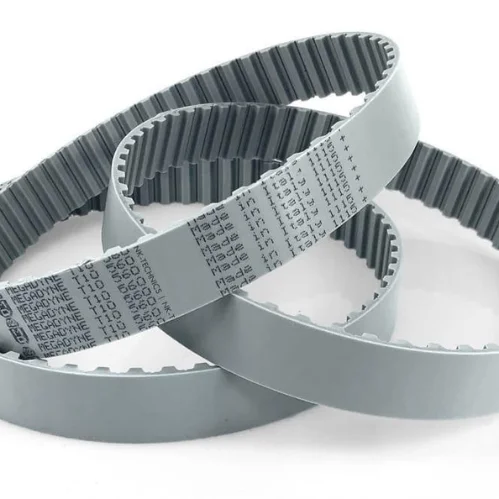
Efficiency, accuracy, and reliability are among some of the most important attributes needed in modern industries to enhance productivity. One of the main parts that can help attain these features is the industrial conveyor timing belt. They serve the purpose of providing reliable synchronization and motion within the system.
Whether you are operating in a manufacturing facility, packaging industry, or any other business involving food processing and automation, timing belts will assist you to handle materials effectively and reliably. Due to their accurate positioning and high-power transmission capabilities, timing belts form an important element of industrial equipment.
What Are Industrial Conveyor Timing Belts?
Industrial conveyor timing belts are those types of belts that have molded teeth that engage positively with the grooves on the pulleys. Through this mechanism, slippage is prevented and therefore accurate movement of items is assured within the conveyor.
These belts are usually made from either polyurethane (PU) or rubber materials and are reinforced with steel and kevlar cords.
Characteristics of Industrial Conveyor Timing Belts
1. Precise Synchronization
Since timing belts have teeth that help in ensuring synchronization, they work perfectly in automatic production lines.
2. Non-Slip Operation
Contrary to other belts, timing belts have positive drive engagement and therefore no slippage occurs.
3. Load Capacity
They are designed for carrying heavy loads without compromising performance and consistency.
4. Durability
They are made of wear-resistant materials and can withstand harsh industrial conditions.
5. Maintenance Friendly
Due to their robustness, maintenance costs and time are significantly reduced.
Applications of Industrial Conveyor Timing Belts
i. Manufacturing Industry
Timing belts are used in factories for the transportation of products through production lines.
ii. Packaging Lines
They are commonly used in packaging industries for product placement, labeling, sealing and sorting.
iii. Food Processing Industry
Timing belts in food processing industry are specially made for hygienic material handling.
iv. Automotive Industry
They are extensively used by automakers for movement and assembly automation of parts.
v. Pharmaceutical Industry
The industry needs precision conveyor systems, and the use of timing belts can provide accuracy in such cases.
Benefits of Using Industrial Conveyor Timing Belts
1. Operational Efficiency
Due to the positive drive system, there is less energy loss, and the performance of the process increases.
2. High Product Quality
Precise positioning reduces any mistakes in manufacturing and packaging processes, which ensures product quality.
3. Minimum Downtime
Durable design and lower maintenance requirements ensure continuous operation.
4. Economical Performance
The long-life span of the belt and lower maintenance costs make the timing belt an economical choice for industries.
5. Increased Productivity
The performance of the conveyors can increase production rate and productivity.
Selection of Correct Timing Belt
In order to choose the correct timing belt, the following factors should be taken into consideration:
1 Load considerations
2 Operational speed
3 Environmental issues
4 Material of the belt
5 Compatibility with pulley
6 Thermal issues
7 Chemical issues
8 Maintenance issues
Belt Maintenance Tips for Longevity
In order to get the maximum life out of your industrial conveyor timing belt:
Inspect regularly.
a. Keep proper belt tension.
b. Inspect pulley alignment occasionally.
c. Keep the belts free from dirt and contamination.
d. Replace old parts immediately.
e. Adhere to manufacturer guidelines for maintenance.
Proper maintenance prevents any unwanted failures and increases the life of the belts.
Importance of Quality Timing Belts
By buying high-quality timing belts for industrial conveyors, you will ensure that you have dependable operation and increased efficiency. Such timing belts are more resistant to wear, synchronized and durable enough to perform well even in harsh environments.
Dealing with a reputable timing belt manufacturing company or distributor is essential.